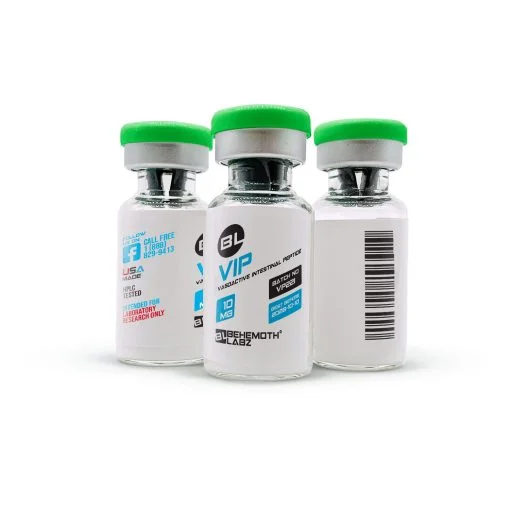
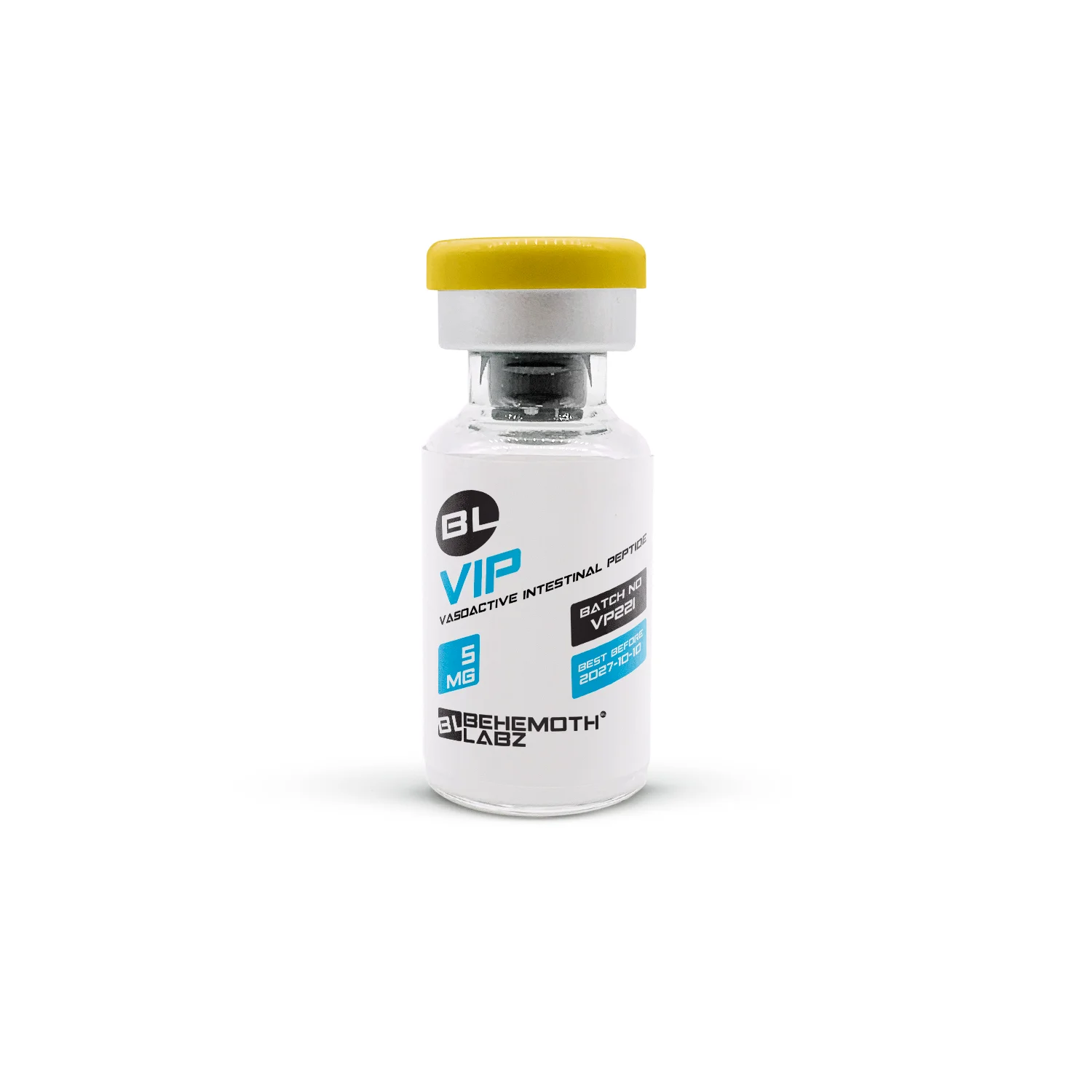
Product Details: VIP (Vasoactive Intestinal Peptide)
Vasoactive Intestinal Peptide (VIP) is a neuropeptide made up of 28-amino-acids. It belongs to the secretin/glucagon peptide superfamily. It is endogenously made in neural, gastrointestinal, and immune-related tissues. VIP is being widely studied in experimental systems due to its diverse signaling roles. VIP interacts with specific G protein-coupled receptors. The primary among them are VPAC1 and VPAC2. Both are broadly expressed across various cell types in laboratory models. Its conserved structure and receptor affinity make it a valuable compound for checking intracellular signaling pathways and intercellular communication in controlled research environments.
Mechanism of Action
VIP shows its activity through binding to VPAC1 and VPAC2 receptors. These are members of the G protein-coupled receptor (GPCR) family. Upon receptor binding in experimental models, VIP activates intracellular G proteins. This leads to stimulation of adenylate cyclase. The results are increased levels of cyclic adenosine monophosphate (cAMP). It is a key secondary messenger involved in regulating cellular signaling cascades. The elevation of cAMP affects downstream pathways. This includes protein kinase A (PKA) activation and transcriptional modulation. All this has made researchers study signal transduction mechanisms and receptor-mediated cellular responses in laboratory settings.
Properties of VIP (Vasoactive Intestinal Peptide):
- Molecular Formula: C147H237N43O43S
- Molecular Weight: 3326.8 g/mol
- CAS Number: 122395-32-9
- PubChem CID: 16132380
- Synonyms: Vasoactive Intestinal Peptide, VIP, Vasoactive Intestinal Polypeptide, Intestinal Vasoactive Peptide
- Sequence Length: 28 amino acids
- IUPAC Name: H-His-Ser-Asp-Ala-Val-Phe-Thr-Asp-Asn-Tyr-Thr-Arg-Leu-Arg-Lys-Gln-Met-Ala-Val-Lys-Lys-Tyr-Leu-Asn-Ser-Ile-Leu-Asn-OH
Research Applications/Benefits of VIP (Vasoactive Intestinal Peptide)
Receptor Signaling Studies
VIP is widely used in laboratory research to investigate GPCR-mediated signaling. As stated earlier, it is particularly involved in VPAC1 and VPAC2 receptors. It serves as a model ligand for studying receptor activation, binding affinity, and downstream signaling pathways.
cAMP Pathway Analysis
Due to its ability to stimulate adenylate cyclase activity, VIP is frequently utilized in experimental systems. This is done in order to study cyclic AMP (cAMP)-dependent signaling mechanisms and their role in cellular communication.
Neurotransmission Research
VIP plays a key role in neuropeptide signaling. This makes it valuable in preclinical models examining neurotransmission, synaptic modulation, and neurochemical signaling networks.
Immunological Signaling Models
In controlled research environments, VIP is used to explore interactions between neuropeptides and immune-related cellular pathways. This helps in the understanding of signaling cross-talk in experimental systems.
Gastrointestinal System Research
VIP is applied in laboratory studies focusing on enteric signaling and peptide-mediated communication. It is mostly done within gastrointestinal models, providing insight into regulatory mechanisms at the cellular level.
Why Choose BehemothLabz to Buy VIP (Vasoactive Intestinal Peptide)
BehemothLabz is dedicated to providing high-quality research compounds manufactured under strict quality control standards. Each batch of VIP peptide is carefully synthesized and undergoes independent third-party testing to verify purity, composition, and consistency. With a strong emphasis on transparency and reliability, BehemothLabz supports researchers by delivering dependable materials suitable for advanced laboratory and experimental applications.
Disclaimer: This information is for educational purposes. We do not allow the human consumption of our products. All our products are sold for laboratory and research experiments.
ATTENTION: All BehemothLabz products are strictly for LABORATORY AND RESEARCH PURPOSES ONLY. They are not to be used for any human or veterinary purposes.
References:
- Dickson L, Finlayson K. “VPAC and PAC receptors: From ligands to function.” Pharmacology & Therapeutics. 2009;121(3):294–316. https://doi.org/10.1016/j.pharmthera.2008.11.006
- Gozes I, Brenneman DE. “VIP: Molecular biology and neurobiological function.” Molecular Neurobiology. 1989;3(4):201–236. https://doi.org/10.1007/BF02935683