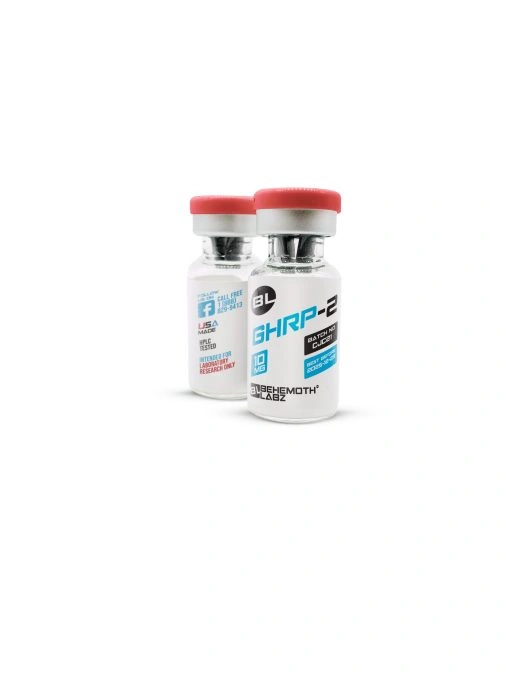
Product Details: GHRP-2 (Peptide)
GHRP-2 is short for Growth Hormone Releasing Peptide-2. It is a laboratory made hexapeptide that belongs to the growth hormone secretagogue or GHS class. It was basically made for use in laboratory and preclinical research. The primary aim was to study regulatory mechanisms involved in growth hormone secretion and endocrine signaling pathways. GHRP-2 is structurally designed to interact with specific receptor systems. These are the ones linked with peptide-mediated hormone release. This makes it a valuable compound for controlled experimental investigations into neuroendocrine communication and peptide-receptor dynamics.
Mechanism of Action
In preclinical and experimental models, GHRP-2 is famous for its interaction with growth hormone secretagogue receptors (GHS-R). These are also referred to as ghrelin receptors. They are expressed in pituitary and hypothalamic tissue models. Upon receptor binding, GHRP-2 activates intracellular signaling cascades involving G protein-coupled pathways. This makes modulation of downstream signaling molecules and transcriptional responses possible. These interactions are studied in controlled laboratory environments to check:
- Receptor activation
- Ligand specificity, and
- Peptide-mediated endocrine signaling mechanisms
Properties of GHRP-2 (Peptide):
- Molecular Formula: C47H56F3N9O8
- Molecular Weight: 932.0 g/mol
- CAS Number: Not consistently assigned (commonly referenced as trifluoroacetate salt form)
- PubChem CID: 134715446
- Synonyms: GHRP-2 (trifluoroacetate salt), D-Ala-3-(2-naphthalenyl)-D-Ala-L-Ala-L-Trp-D-Phe-L-lysine amide TFA
- Peptide Class: Growth Hormone Releasing Peptide (GHRP)
Research Applications/Benefits of GHRP-2 (Peptide)
Receptor Binding and Activation Studies
GHRP-2 is utilized in laboratory models to evaluate binding affinity and activation of growth hormone secretagogue receptors. This supports research into ligand-receptor interactions.
Endocrine Signaling Pathway Research
The compound is also applied in experimental systems to study intracellular signaling cascades. These are the ones linked with peptide-mediated hormone regulation and receptor activation.
Peptide Structure-Function Analysis
It is also used in preclinical research. It helps in seeing how structural modifications affect peptide activity, receptor selectivity, and signaling efficiency.
Comparative Secretagogue Research
GHRP-2 serves as a reference compound in studies. These studies are done for comparing different growth hormone secretagogues. It enables evaluation of potency and receptor specificity in laboratory models.
Neuroendocrine Communication Models
It is utilized in controlled experimental environments to check peptide-driven signaling between hypothalamic and pituitary tissue systems.
Why Choose BehemothLabz to Buy GHRP-2 (Peptide)
BehemothLabz provides high-purity research peptides manufactured under strict quality control standards. Each batch of GHRP-2 undergoes independent third-party testing to verify identity, purity, and consistency. With a focus on reliability and reproducibility, BehemothLabz supports researchers with dependable compounds suitable for advanced laboratory and preclinical investigations.
Disclaimer: This information is for educational purposes. We do not allow the human consumption of our products. All our products are sold for laboratory and research experiments.
ATTENTION: All BehemothLabz products are strictly for LABORATORY AND RESEARCH PURPOSES ONLY. They are not to be used for any human or veterinary purposes.
References:
- Bowers CY, Momany FA, Reynolds GA, Hong A. “On the in vitro and in vivo activity of growth hormone-releasing peptides.” Endocrinology. 1984;114(5):1537–1545. https://doi.org/10.1210/endo-114-5-1537
- Smith RG, Van der Ploeg LH, Howard AD, et al. “Peptidomimetic regulation of growth hormone secretion.” Endocrine Reviews. 1997;18(5):621–645. https://doi.org/10.1210/edrv.18.5.0312