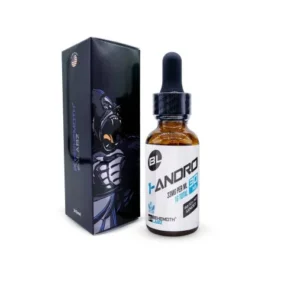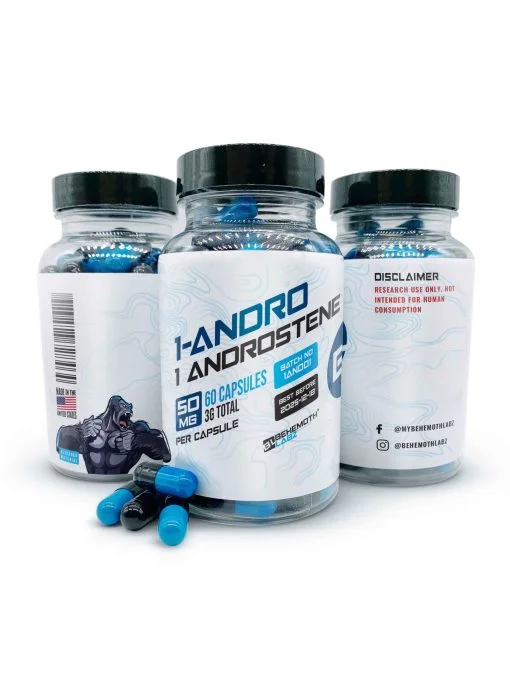
1-Androsterone or 1andro is a synthetic steroidal compound structurally classified within androgen-related molecular frameworks. In chemical literature, it is often called by different names, such as 1-androstene derivatives.
Within research settings, this compound is examined for its role as a precursor substrate in enzymatic conversion pathways involving steroidogenic intermediates. Its structure lacks a methyl group at the C-17 position, which is relevant in studies analyzing phase I and phase II metabolic processing.
Mechanism of Action
1-androsterone capsule is investigated for its interaction with enzymatic pathways involved in steroid metabolism. It may undergo conversion through dehydrogenase-mediated reactions, forming downstream androgenic intermediates.
At the molecular level, this compound is studied for its potential interaction with androgen receptor binding domains following structural modification via enzymatic activity. These interactions are analyzed in terms of receptor affinity, cofactor recruitment, and downstream signaling pathway modulation.
Due to its structural characteristics, it demonstrates low binding affinity for aromatase enzymes, which are responsible for catalyzing the conversion of androgens into estrogenic compounds. This makes it relevant in pathway-specific studies focusing on steroidogenesis and enzyme selectivity.
Chemical Properties of 1-Androsterone
| Property | Value |
| Molecular Formula | C19H28O2 |
| Synonyms | 1-Androsterone, 1-androstene-3beta-ol,17-one, (3beta,5alpha)-3-Hydroxyandrost-1-en-17-one |
| IUPAC Name | (3R,5S,8R,9S,10R,13S,14S)-3-hydroxy-10,13-dimethyl-3,4,5,6,7,8,9,11,12,14,15,16-dodecahydrocyclopenta[a]phenanthren-17-one |
| Molecular Weight | 288.4 g/mol |
| CAS Number | 23633-63-8 |
Research Applications
Enzymatic Conversion Pathway Analysis
1-Androsterone is utilized in laboratory studies examining enzymatic activity within steroidogenic pathways. It serves as a substrate model for analyzing dehydrogenase-mediated transformations and the formation of downstream androgen-related intermediates. These investigations focus on enzyme kinetics, substrate specificity, and catalytic efficiency under controlled conditions.
Androgen Receptor Binding Studies
This compound is applied in receptor-binding assays to evaluate its interaction with androgen receptor ligand-binding domains following structural modification. Research focuses on molecular affinity, receptor activation potential, and co-regulator recruitment involved in transcriptional signaling pathways.
Aromatase Enzyme Selectivity Research
1-Androsterone is also examined in studies involving aromatase enzyme interactions. Due to its structural configuration, it is used to analyze substrate compatibility and enzyme selectivity in androgen-to-estrogen conversion pathways. These studies contribute to understanding how structural variations influence enzymatic binding and catalytic behavior.
Steroid Structure-Activity Relationship (SAR) Studies
The compound is used in structure-activity relationship (SAR) research to investigate how modifications in molecular structure impact receptor interaction and enzymatic processing. This includes analysis of functional groups, stereochemistry, and their influence on biochemical pathway engagement.
Why Choose BehemothLabz to Buy 1-Androsterone for Research
Buy 1-andro for sale from Behemoth Labz as it provides research-grade 1-Androsterone manufactured under controlled laboratory conditions with strict quality assurance protocols. Each batch undergoes analytical verification to ensure consistency in molecular composition and purity.
Comprehensive documentation, including laboratory testing reports and sourcing transparency, supports reproducibility in experimental settings. BehemothLabz maintains a compliance-focused approach, supplying compounds intended strictly for laboratory-based investigation and analytical research
Disclaimer
1-Androsterone Capsules are intended strictly for laboratory research and analytical purposes only. It is not intended for use in diagnostic procedures, therapeutic applications, or in vivo studies of any kind.
Any references to biochemical pathways, receptor interactions, or enzymatic processes are provided solely for informational and research-context purposes. This compound must be handled exclusively by qualified professionals in controlled laboratory environments in accordance with applicable regulations and safety guidelines.
Improper handling or use outside of controlled research settings is strictly prohibited.
References
- Matsui, M., & Nagai, F. (1986). Genetic deficiency of androsterone UDP-glucuronosyltransferase activity in Wistar rats is due to the loss of enzyme protein. Biochemical Journal, 234(1), 139–144. https://doi.org/10.1042/bj2340139
- Nagai, F., Homma, H., Tanase, H., & Matsui, M. (1988). Studies on the genetic linkage of bilirubin and androsterone UDP-glucuronyltransferases by cross-breeding of two mutant rat strains. Biochemical Journal, 252(3), 897–900. https://doi.org/10.1042/bj2520897