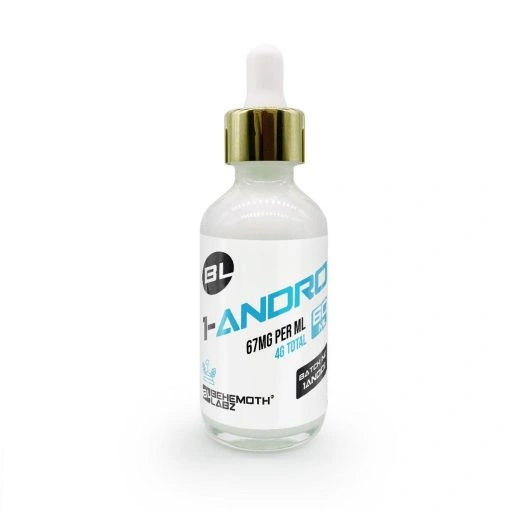
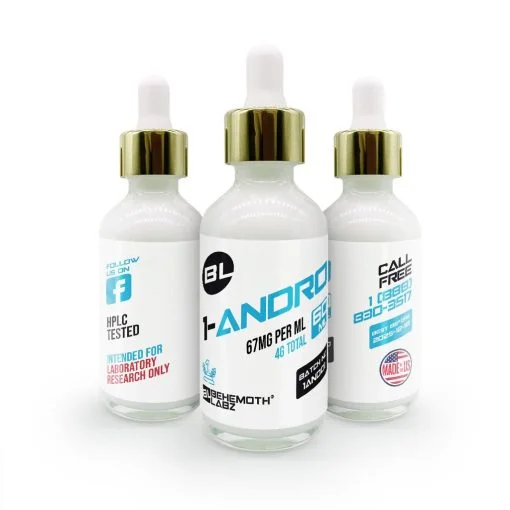
Product Details: 1-Andro (Transdermal Liquid Form)
1-Andro, also referred to as 1-DHEA. It is categorized as a prohormone and being investigated in controlled conditions to see if it can transform into other androgen-related chemicals. [1]
This substance is frequently referred to as a precursor to 1-testosterone. It is therefore included in research that examines the interaction and signaling behavior of androgen receptors. Its activity is also compared to that of other comparable chemicals in certain papers, although the outcomes vary depending on the model. [1] [2]
Its structure differs from that of 4-Andro and other similar compounds. Its behavior during conversion and receptor contact may be impacted by this variation. In this field, research is still being conducted.
Mechanism of Action
1-Andro has potential as a precursor molecule. Once introduced into an experimental model, it may go through enzymatic conversion.
One process uses enzymes like 17β-hydroxysteroid dehydrogenase. These enzymes convert precursor chemicals into active steroid molecules. [3]
Because there are several versions of this enzyme, conversion is not always consistent. According to certain research, this process may produce a variety of androgen-related chemicals.
The outcome depends on the model used and the conditions of the experiment.
Properties of 1-Andro (Transdermal Liquid Form)
- Molecular Formula: C₁₉H₂₈O₂
- Molecular Weight: 288.43 g/mol
- CAS Number: 23633-63-8
- PubChem CID: 443976
- IUPAC Name: (3R,5S,8R,9S,10R,13S,14S)-3-Hydroxy-10,13-dimethyl-3,4,5,6,7,8,9,11,12,14,15,16-dodecahydrocyclopenta[a]phenanthren-17-one
- Synonyms: 1-Andro, 1-DHEA, 1-Dehydroepiandrosterone, 1-Prasterone [4]
Research Applications of 1-Andro
Androgen Pathway Research
Researchers investigate how precursor chemicals affect receptor binding in controlled models. This helps in understanding how androgen pathways behave under various contexts. The results may vary based on the enzyme activity in the system. [1][3]
Hormone Conversion Studies
Conversion behavior is another topic of concern. 1-Andro is used to track the conversion of precursor chemicals into active metabolites. Several potential conversion paths are shown by certain experiments. It is therefore helpful in researching steroid routes and enzymatic activity. [3]
Cellular Activity Observation
There are also studies focusing on how androgen-related signals affect cellular processes. This includes protein signaling and basic cell response in laboratory environments. These observations are still limited and need further validation. [2]
Why Buy 1-Andro from BehemothLabz
BehemothLabz sells research compounds with clear details that may help researchers decide to buy 1-Andro transdermal liquid.
Each batch is checked before release. So consistency is easier to manage.
Ordering is quick, with vast payment options. They can ship the products to many locations without issue.
If you are looking for 1-Andro for lab use, this is one direct source. Reach out to the support team at support@behemothLabz.com | (307) 429-0990 if you have a question.
Disclaimer: This information is for educational purposes. We do not allow the human consumption of our products. All our products are sold for laboratory and research experiments.
Please make sure you go through the Terms and Conditions. Please research the scientific uses of this product before making any purchases. Make note that the packaging and labels of the product may differ from those shown on the website.
References
- Labrie, F. (1991). Intracrinology. Molecular and Cellular Endocrinology, 78(3), C113–C118. https://pubmed.ncbi.nlm.nih.gov/1936571/
- Traish, A. M., et al. (2011). Dehydroepiandrosterone (DHEA) and androgen pathways. The Journal of Sexual Medicine, 8(11), 2960–2982. https://pubmed.ncbi.nlm.nih.gov/21995863/
- Penning, T. M. (2015). Human hydroxysteroid dehydrogenases and steroid metabolism. Steroids, 103, 139–147. https://pubmed.ncbi.nlm.nih.gov/26278090/
- PubChem. (n.d.). 1-Androsterone (CID: 443976). National Center for Biotechnology Information. https://pubchem.ncbi.nlm.nih.gov/compound/443976