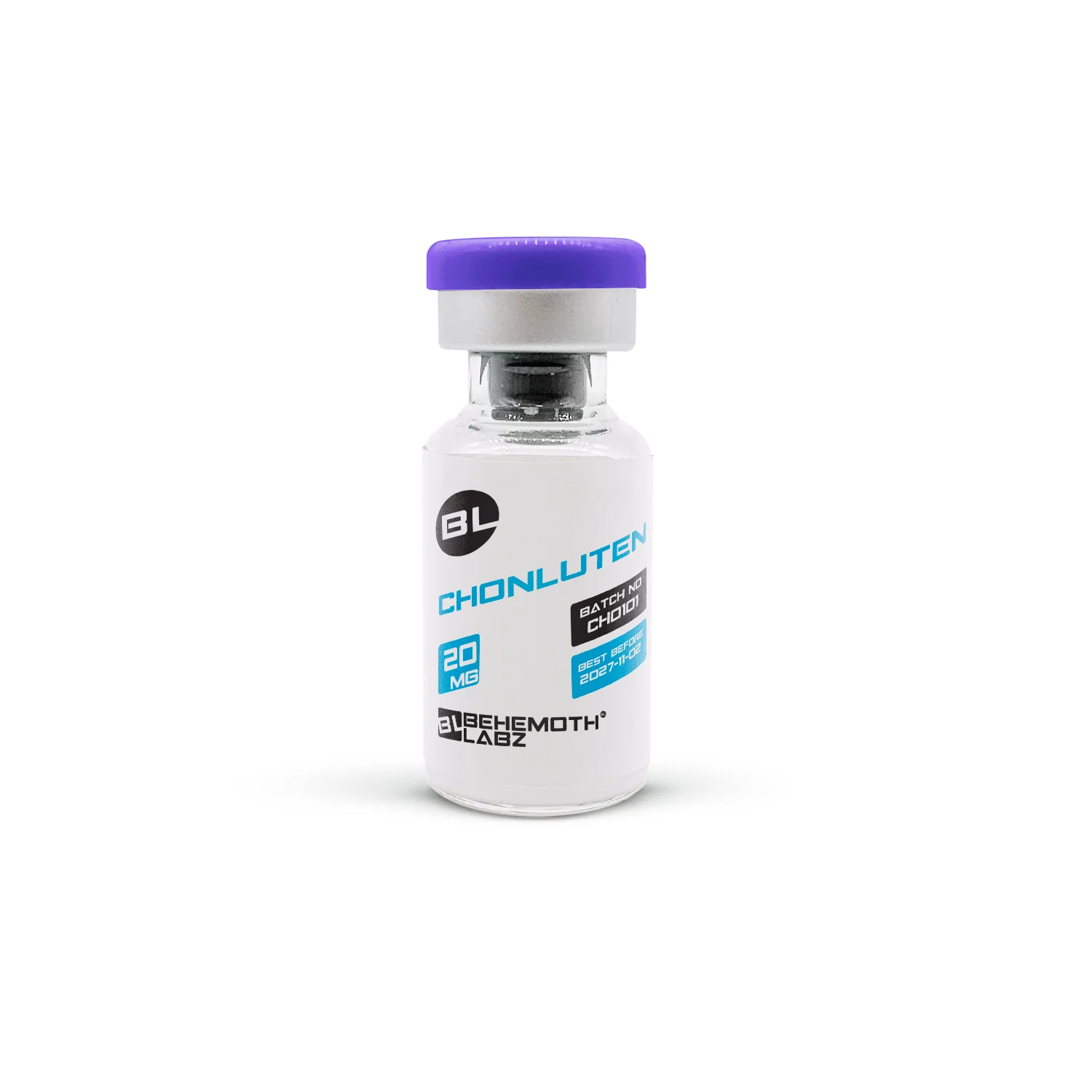
Product Details – Chonluten
Chonluten peptide is a synthetic tripeptide composed of three amino acids: aspartic acid, glutamic acid, and glycine. It is also referred to as T-34. As a bioregulator peptide, Chonluten is studied for its interactions with specific molecular pathways and intracellular signaling mechanisms under controlled experimental conditions.
Research investigations focus on how Chonluten modulates intracellular processes related to structural protein expression and signaling cascades, particularly in cellular models associated with respiratory, gastrointestinal, and connective tissue pathways.
Mechanism of Action
Chonluten peptide is examined for its capacity to enter cells and modulate gene expression and protein synthesis pathways.
Experimental studies indicate that Chonluten interacts with structural proteins and signaling molecules, including components of the STAT pathway (STAT1 and STAT3), which are involved in intracellular communication and molecular regulation.
At the biochemical level, Chonluten’s activity involves modulation of molecular signaling cascades that influence structural protein assembly, oxidative stress response pathways, and regulatory networks linked to tissue structural integrity. These mechanisms are observed exclusively in controlled laboratory and preclinical models
Chemical Properties Chonluten
| Property | Value |
| Product Name | Chonluten Peptide |
| Alternative Names | T-34 Tripeptide, EDG |
| Molecular Formula | C11H17N3O8 |
| Molecular Weight | 319.27 g/mol |
| CAS Number | 75007-24-8 |
| PubChem CID | 194641 |
Research Applications
Structural Protein Modulation
Chonluten peptide is applied in research to examine its effect on structural protein expression. Studies focus on how peptide-mediated modulation can influence intracellular organization and molecular stability in experimental models.
STAT Pathway Signaling Research
Laboratory investigations explore Chonluten’s interaction with STAT1 and STAT3 signaling pathways. These studies aim to understand the peptide’s role in modulating intracellular transcription and signaling cascades under controlled conditions.
Tissue Structural and Cellular Pathway Studies
Chonluten is also utilized in research on molecular pathways associated with tissue structural integrity, oxidative stress regulation, and cellular homeostasis. These investigations examine how peptide activity may influence molecular networks relevant to connective tissue, epithelial structures, and gastrointestinal cellular models.
Why Choose BehemothLabz to Buy Chonluten for Research
BehemothLabz supplies research-grade Chonluten produced under controlled laboratory conditions with strict quality assurance protocols in place. Each batch undergoes detailed analytical verification to ensure consistency in molecular composition and purity.
In addition, comprehensive documentation, including laboratory testing reports and sourcing transparency, supports reproducibility across experimental applications. BehemothLabz maintains a compliance-focused approach, ensuring that all compounds are supplied exclusively for laboratory-based investigation and analytical research.
Disclaimer
Chonluten is intended strictly for laboratory research and analytical purposes only. It is not designed for diagnostic procedures, therapeutic applications, or any form of in vivo study.
All references to biochemical pathways, receptor interactions, and enzymatic processes are provided solely within a research context. This compound must be handled only by qualified professionals within controlled laboratory environments, in accordance with applicable regulations and safety standards.
Any use outside of these defined research conditions is strictly prohibited.
References
- Avolio, F., Martinotti, S., Khavinson, V. K., Esposito, J. E., Giambuzzi, G., Marino, A., Mironova, E., Pulcini, R., Robuffo, I., Bologna, G., Simeone, P., Lanuti, P., Guarnieri, S., Trofimova, S., Procopio, A. D., & Toniato, E. (2022). Peptides Regulating Proliferative Activity and Inflammatory Pathways in the Monocyte/Macrophage THP-1 Cell Line. International journal of molecular sciences, 23(7), 3607. https://doi.org/10.3390/ijms23073607
- Khavinson, V., Linkova, N., Kozhevnikova, E., Dyatlova, A., & Petukhov, M. (2022). Transport of Biologically Active Ultrashort Peptides Using POT and LAT Carriers. International journal of molecular sciences, 23(14), 7733. https://doi.org/10.3390/ijms23147733