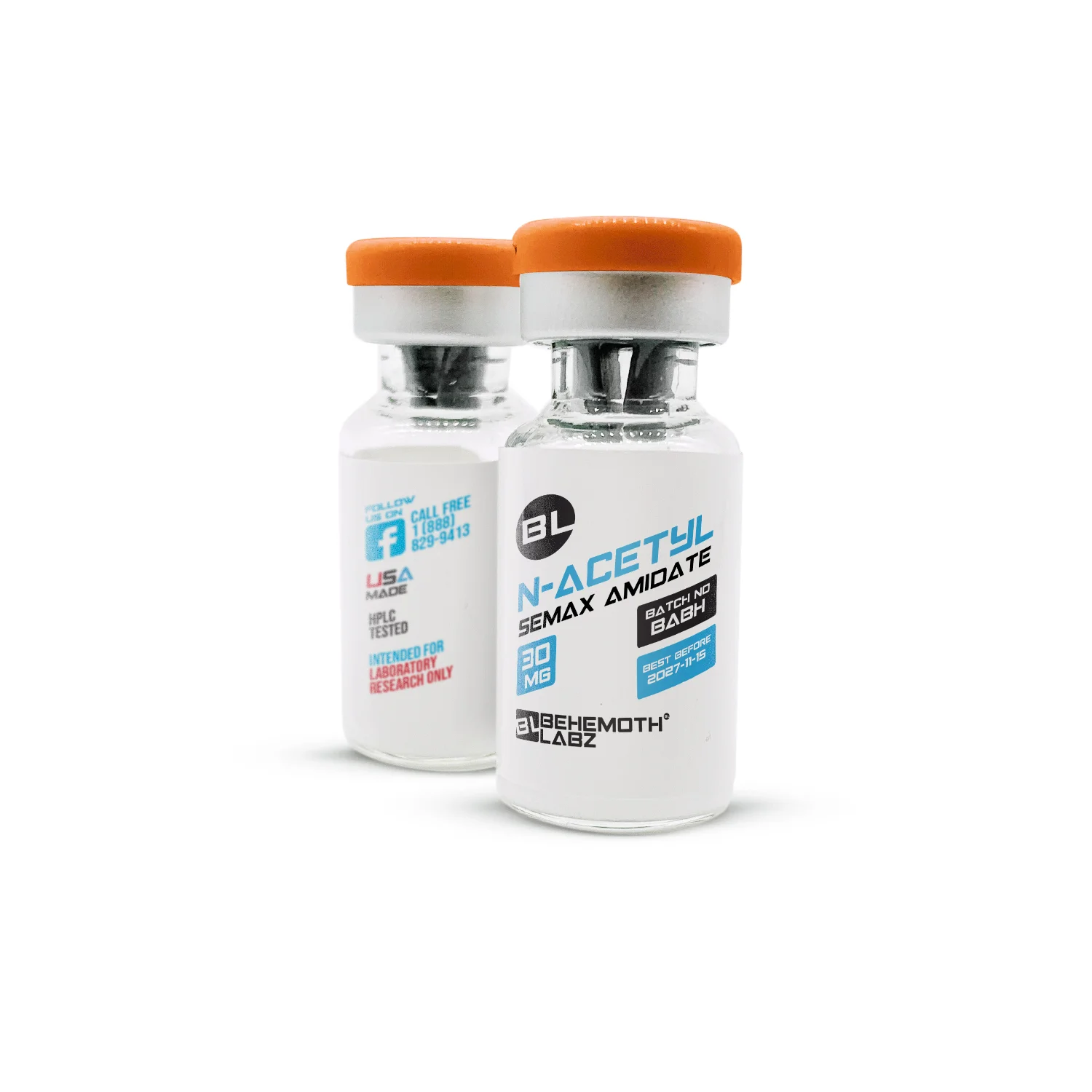
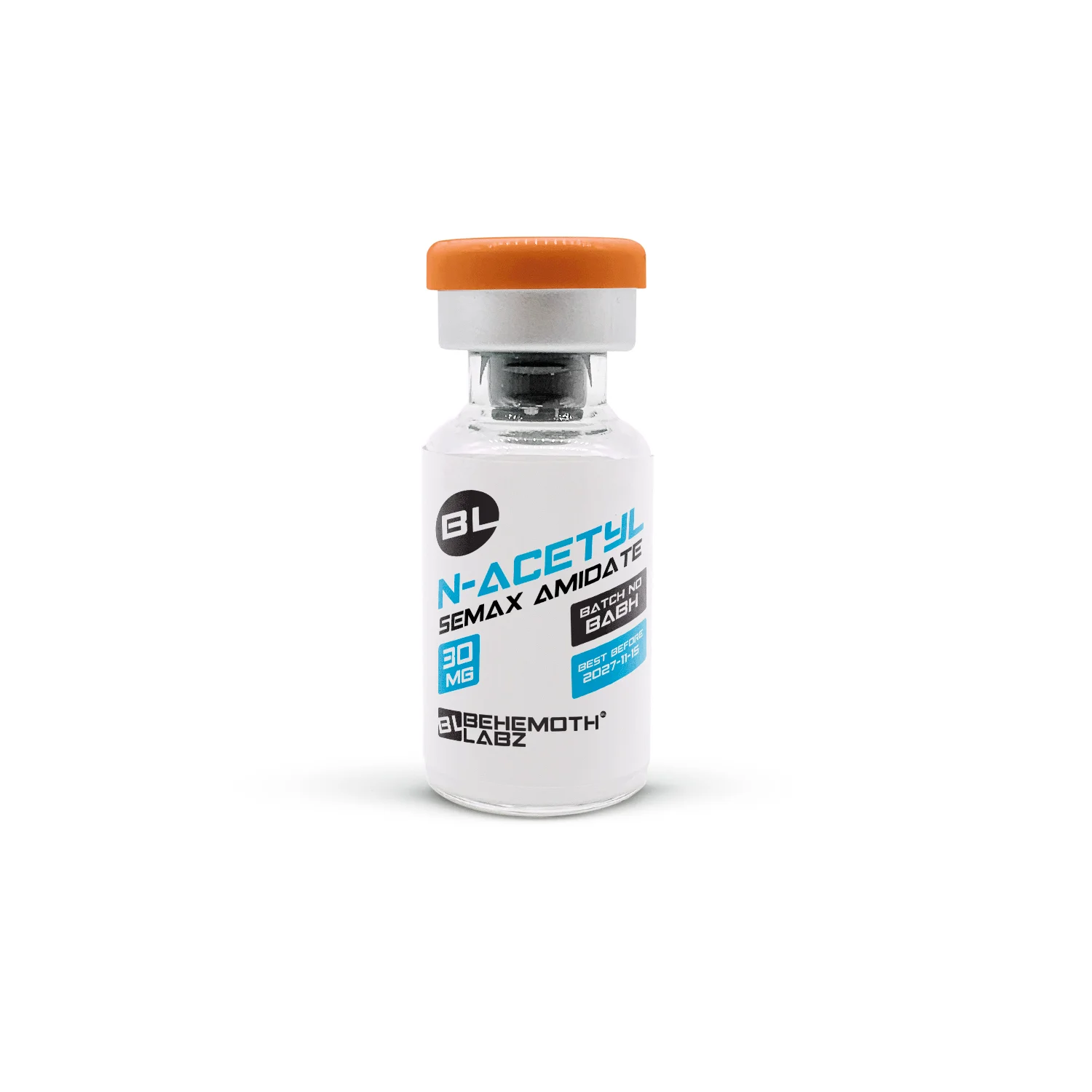
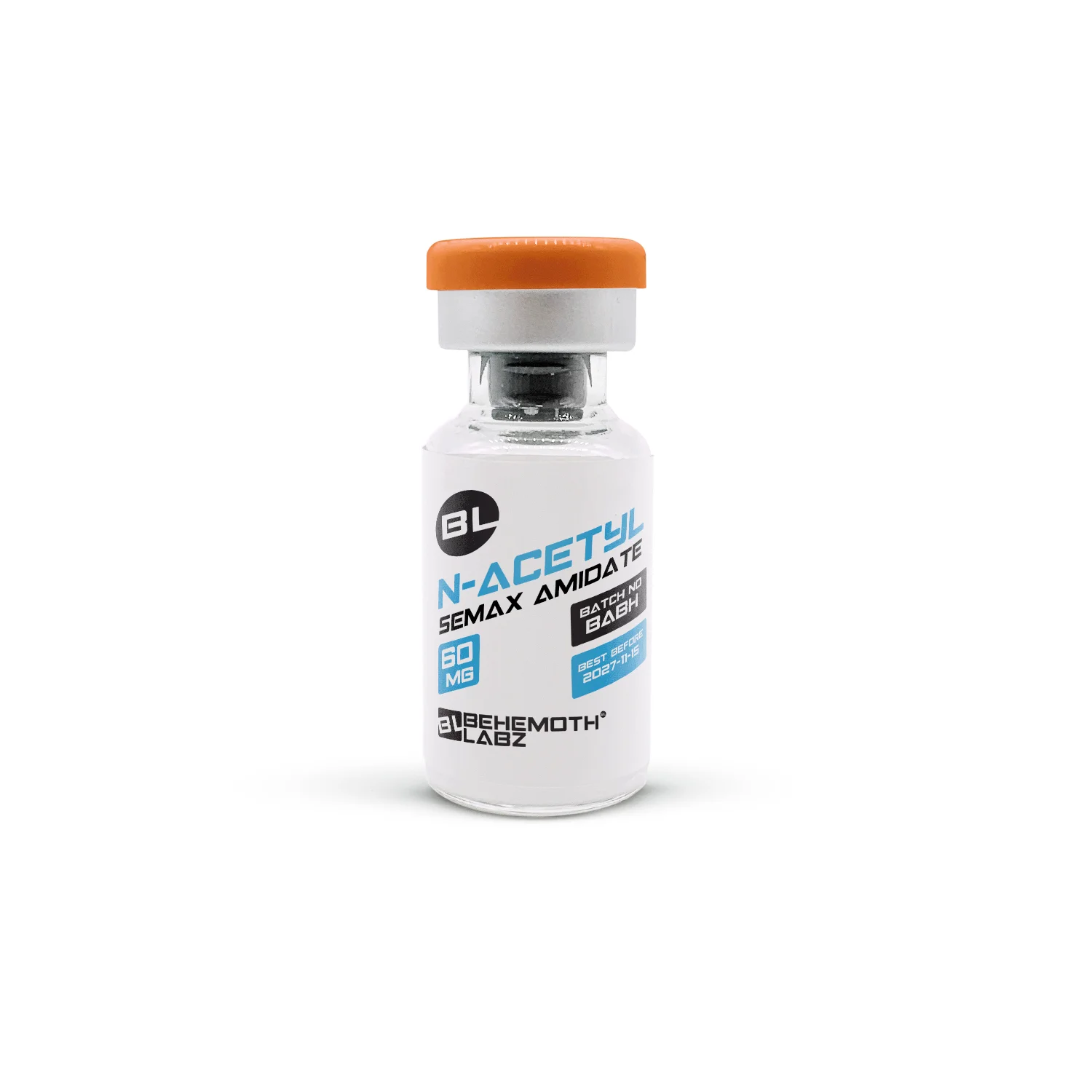
Product Details: N-Acetyl Semax Amidate (Peptide)
N-Acetyl Semax Amidate is a chemically modified form of the peptide Semax. It incorporates structural changes such as N-acetylation and amidation, which help protect the molecule from rapid enzymatic degradation. These modifications may allow the compound to maintain its integrity for longer durations under experimental conditions.
N-Acetyl Semax and its derivatives have been studied for their involvement in neurobiological pathways related to cognitive signaling and cellular response to stress in research models. This peptide may play a role in mechanisms associated with memory processes, neural repair, and neurotrophic factor regulation in research conditions.
How Does N-Acetyl Semax Amidate Work?
N-Acetyl Semax Amidate is believed to work through various mechanisms, although it’s important to note that research is ongoing, and its exact mode of action is not fully elucidated.
Studies in research models have suggested that Semax, the precursor to N-Acetyl Semax Amidate, may influence dopaminergic brain systems. Semax appears to enhance the release and intracellular levels of dopamine in certain regions of the brain, indicating its potential impact on the dopaminergic system.
Properties of N-Acetyl Semax Amidate
- CAS Number: 80714-61-0
- Molar Mass: 854.97 g·mol−1
- Chemical Formula: C39H54N10O10S
- IUPAC Name: 3-Chloro-2,4-difluorobenzoic acid
Published research Findings on N-Acetyl Semax Amidate
One prominent line of research on Semax and its modified forms, including N-Acetyl Semax Amidate, shows involvement in neurotrophic signaling pathways. A study reported that Semax increased levels of brain-derived neurotrophic factor (BDNF) in the rat basal forebrain. This effect was associated with specific receptor binding and suggests that the peptide may influence synaptic plasticity and neuronal signaling processes in experimental models.
Another research indicates that Semax can regulate gene expression related to neurotrophins such as BDNF and nerve growth factor (NGF). In a separate study indexed on PubMed, experimental models demonstrated rapid and region-specific changes in neurotrophin gene expression within brain tissues after exposure to the peptide. This suggests a role in modulating molecular pathways linked to neuronal survival, differentiation, and cellular adaptation under controlled laboratory conditions.
Note: N-Acetyl Semax Amidate is not approved by the FDA for medical use. This compound is intended for research purposes only and is not authorized for clinical or therapeutic applications.
Why Choose BehemothLabz to Buy N-Acetyl Semax Amidate?
BehemothLabz has established itself as a reliable and reputable source for research compounds since 2014. We take pride in offering the highest-quality products that are backed by independent, third-party-issued Certificates of Analysis for identification, purity, and concentration.
Our commitment to quality extends to every aspect of our business, from same-day processing to free shipping on all orders over $100 and our satisfaction guarantee.
At BehemothLabz, we understand the importance of having access to the best compounds for research purposes. Our team is dedicated to providing exceptional customer service and ensuring that our customers have access to the compounds they need to conduct groundbreaking research.
BehemothLabz Disclaimer
Please make sure you go through the Terms and Conditions, and please familiarize yourself with them, as they are important. Please research the scientific uses of this product before making any purchases. Make note that the packaging and labels of the product may differ from those shown on the website.
Buying the product means you agree to our Terms and Conditions. You can contact our awesome customer service team at support@behemothlabz.com if you are not fully satisfied with the product.
All BehemothLabz products are strictly for LABORATORY AND RESEARCH PURPOSES ONLY. They are not to be used for any human or veterinary purposes.
Reference Links
PubChem. (2026). N-acetyl semax amidate. Nih.gov; PubChem. https://pubchem.ncbi.nlm.nih.gov/compound/172638603
Dolotov, O. V., Karpenko, E. A., Seredenina, T. S., Inozemtseva, L. S., Levitskaya, N. G., Zolotarev, Y. A., Kamensky, A. A., Grivennikov, I. A., Engele, J., & Myasoedov, N. F. (2006). Semax, an analogue of adrenocorticotropin (4-10), binds specifically and increases levels of brain-derived neurotrophic factor protein in rat basal forebrain. Journal of Neurochemistry, 97 Suppl 1, 82–86. https://doi.org/10.1111/j.1471-4159.2006.03658.x
Agapova, T. Y., Agniullin, Y. V., Shadrina, M. I., Shram, S. I., Slominsky, P. A., Lymborska, S. A., & Myasoedov, N. F. (2007). Neurotrophin gene expression in rat brain under the action of Semax, an analogue of ACTH4–10. Neuroscience Letters, 417(2), 201–205. https://doi.org/10.1016/j.neulet.2007.02.042
Levitskaia, N. G., Sebentsova, E. A., Andreeva, L. A., Alfeeva, L. I., Kamenskii, A. A., & Miasoedov, N. F. (2002). Neuroprotective effects of semax in MPTP-induced disturbances of brain dopamine system. Rossiiskii Fiziologicheskii Zhurnal Imeni I.M. Sechenova, 88(11), 1369–1377. https://pubmed.ncbi.nlm.nih.gov/12587264/