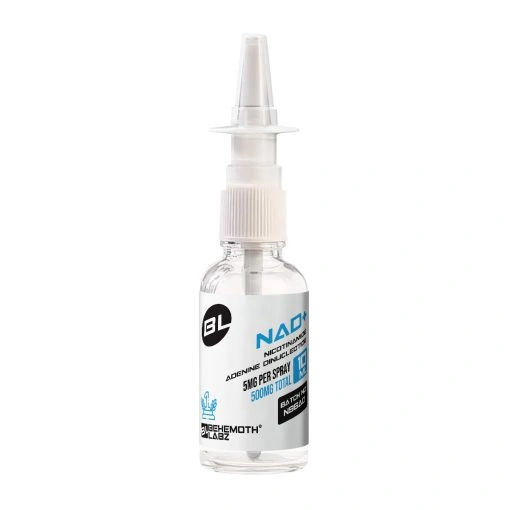

Product Details
NAD+ (Nicotinamide Adenine Dinucleotide) is a pyridine nucleotide that functions as a redox-active coenzyme within cellular systems. It is composed of two nucleotides joined through their phosphate groups, forming a dinucleotide structure. This compound exists in oxidized (NAD⁺) and reduced (NADH) forms, enabling its participation in electron transfer reactions.
Mechanism of Action
NAD⁺ functions as an essential electron carrier in oxidation-reduction (redox) reactions. It alternates between oxidized (NAD⁺) and reduced (NADH) states by accepting and donating electrons, thereby facilitating biochemical reactions within metabolic pathways.
In glycolysis, the tricarboxylic acid (TCA) cycle, and oxidative phosphorylation, NAD⁺ acts as a cofactor for dehydrogenase enzymes, enabling the transfer of electrons to the electron transport chain. This process supports the generation of proton gradients across mitochondrial membranes, which are integral to ATP synthesis at the molecular level.
Additionally, NAD⁺ serves as a substrate for several enzyme classes, including sirtuins and poly(ADP-ribose) polymerases (PARPs). In these pathways, NAD⁺ participates in post-translational modifications such as ADP-ribosylation and deacetylation, which are involved in the regulation of gene expression, chromatin structure, and protein activity.
Chemical Properties of NAD+
| Property | Value |
| Product Name | NAD⁺ (Nicotinamide Adenine Dinucleotide) |
| Chemical Classification | Pyridine nucleotide |
| Molecular Formula | C₂₁H₂₇N₇O₁₄P₂ |
| Structure Type | Dinucleotide coenzyme |
| Redox States | Oxidized (NAD⁺), Reduced (NADH) |
| Solubility | Water-soluble under controlled laboratory conditions |
Research Applications
-
Redox Reaction Modeling
NAD⁺ is widely utilized in studies investigating electron transfer mechanisms within biochemical systems. Its reversible redox properties allow researchers to analyze oxidation-reduction dynamics in controlled environments.
-
Enzyme Cofactor Interactions
This compound is frequently examined as a cofactor in enzymatic reactions involving dehydrogenases. Research focuses on how NAD⁺ binding influences catalytic activity and reaction kinetics at the molecular level.
-
Post-Translational Modification Pathways
NAD⁺ serves as a substrate in pathways involving ADP-ribosylation and deacetylation. These processes are studied to understand protein regulation, signaling pathways, and chromatin-associated molecular mechanisms.
-
Metabolic Pathway Analysis
Investigations involving NAD⁺ often center on its role in interconnected metabolic networks, including glycolysis and oxidative phosphorylation. These studies aim to map biochemical flux and pathway regulation under varying experimental conditions.
Why Choose BehemothLabz to Buy NAD+ for Research
BehemothLabz provides research-grade NAD+ manufactured under controlled laboratory conditions with strict quality assurance protocols. Each batch undergoes analytical verification to ensure consistency in molecular composition and purity.
Comprehensive documentation, including laboratory testing reports and sourcing transparency, supports reproducibility in experimental settings. BehemothLabz maintains a compliance-focused approach, supplying compounds intended strictly for laboratory-based investigation and analytical research
Disclaimer
NAD+ is intended strictly for laboratory research and analytical purposes only. It is not intended for use in diagnostic procedures, therapeutic applications, or in vivo studies of any kind.
Any references to biochemical pathways, receptor interactions, or enzymatic processes are provided solely for informational and research-context purposes. This compound must be handled exclusively by qualified professionals in controlled laboratory environments in accordance with applicable regulations and safety guidelines.
Improper handling or use outside of controlled research settings is strictly prohibited.
References
- Bedalov, A., Hirao, M., Posakony, J., Nelson, M., & Simon, J. A. (2003). NAD+-dependent deacetylase Hst1p controls biosynthesis and cellular NAD+ levels in Saccharomyces cerevisiae. Molecular and cellular biology, 23(19), 7044–7054. https://doi.org/10.1128/MCB.23.19.7044-7054.2003
- Zhou, Y., Wang, L., Yang, F., Lin, X., Zhang, S., & Zhao, Z. K. (2011). Determining the extremes of the cellular NAD(H) level by using an Escherichia coli NAD(+)-auxotrophic mutant. Applied and environmental microbiology, 77(17), 6133–6140. https://doi.org/10.1128/AEM.00630-11