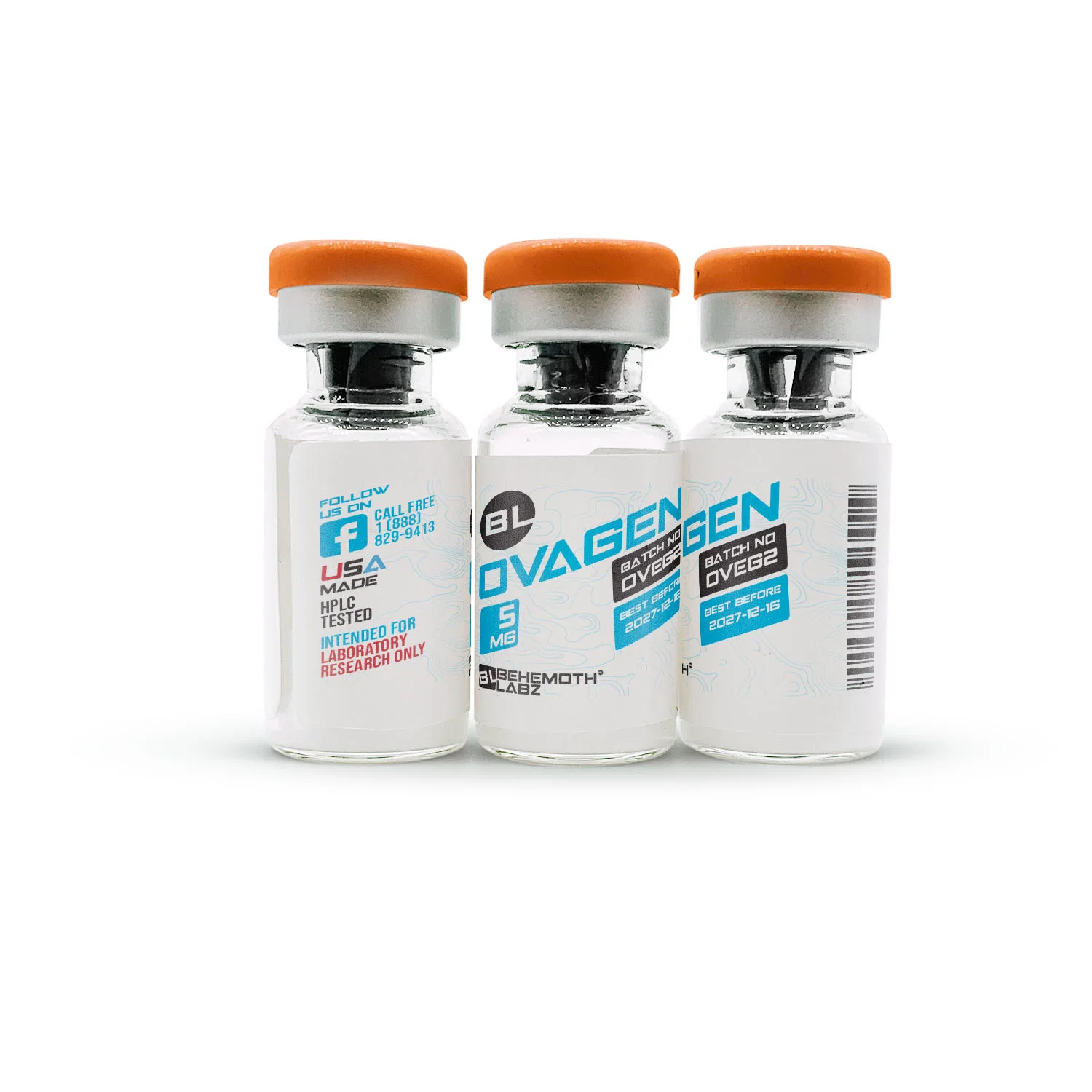
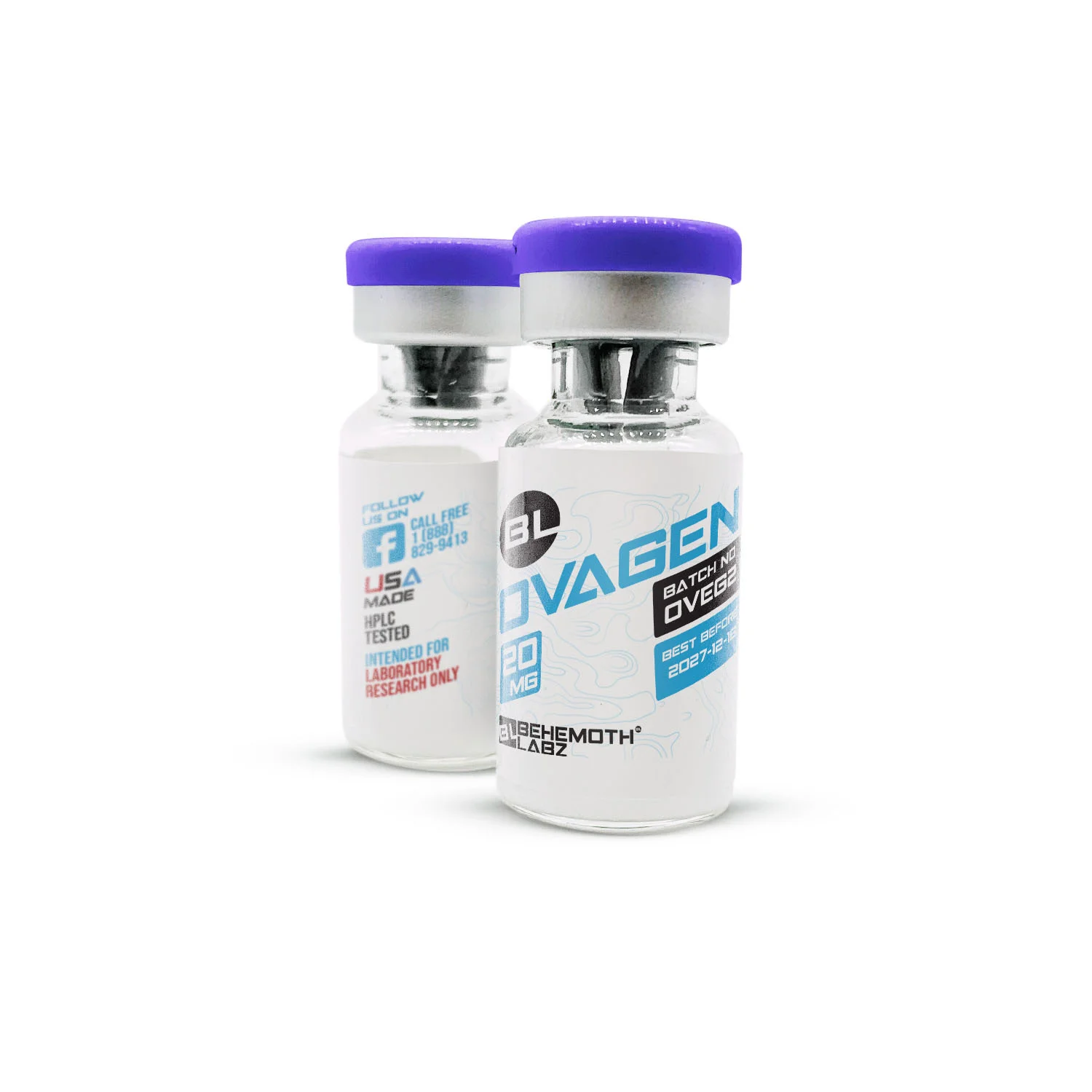
Product Details: Ovagen
Ovagen is a synthetic research compound developed for experimental studies in preclinical models. It is designed to support investigations into cellular signaling pathways, tissue regulation, and molecular interactions in controlled laboratory environments.
In preclinical research, Ovagen is currently explored for its potential effects on cellular regulation and molecular activity. Early studies suggest it may influence signaling mechanisms and biochemical pathways under experimental conditions.
Mechanism of Action
In preclinical models, Ovagen is believed to interact with intracellular and extracellular pathways. Upon administration, it may undergo metabolic processing, producing smaller molecules that distribute through biological systems of the research model. These molecules are hypothesized to influence signaling pathways, cellular responses, and regulatory mechanisms under laboratory conditions.
Researchers also propose that Ovagen may modulate molecular interactions, protein expression, and cellular processes relevant to tissue studies in preclinical models. These effects are currently under investigation and remain limited to controlled experimental contexts.
Properties of Ovagen:
- Molecular Formula: C15H25N3O8
- Molecular Weight: 375.37 g/mol
- CAS Number: Not assigned
- PubChem CID: 168009111
Research Applications/Benefits of Ovagen
Cellular Aging in Renal Cells
Research suggests that Ovagen may have geroprotective effects in kidney (renal) cell cultures. When applied to both young and aged renal cells in vitro, Ovagen was observed to increase cell proliferation while reducing the expression of cellular aging-associated markers such as p16, p21, and p53. Additionally, Ovagen appeared to increase the expression of SIRT6, a protein associated with reduced senescence in experimental cell models.
Renal Function and Sodium/Water Regulation
Further studies by Zamorskii et al. in preclinical kidney cell models indicate that Ovagen may influence tubular handling of sodium and water. Specifically, it was associated with a modest reduction in distal tubular water reabsorption (~2.9%) and a 1.6-fold increase in sodium excretion, while maintaining absolute and relative sodium reabsorption and proximal sodium transport. Distal sodium transport appeared increased without disrupting intrinsic intrarenal regulatory mechanisms. Histological assessments revealed no adverse effects on renal tissue architecture in aged cells.
Hepatic Cell Research
Experimental work, including reports from Khavinson et al., describes Ovagen as a tripeptide with potential hepatoregenerative and hepatoprotective properties in liver cell systems. In vitro studies indicate that Ovagen may prolong the survival of liver cells and stimulate the growth of regenerating hepatic tissue. In preclinical murine models of liver regeneration and experimental cirrhosis, Ovagen was observed to increase the proportion of dividing cells, potentially support biochemical markers related to liver stress, and influence hepatic glycogen content.
Why Choose BehemothLabz to Buy Ovagen
Choose Behemoth Labz for uncompromising quality and laboratory-grade integrity. Our Ovagen is produced under rigorous standards to meet research requirements for preclinical studies.
- Purity Assurance: Each batch undergoes independent laboratory testing to confirm chemical composition and purity.
- Secure Delivery: National and international shipping with safe, encrypted payment methods ensures confidentiality and reliability.
- Research–Grade Standards: Our products are tailored for experimental accuracy, supporting reproducibility and controlled laboratory investigations.
Purchase Ovagen from Behemoth Labz to access high-quality research materials for your laboratory studies.
Disclaimer: This information is for educational purposes. We do not allow the human consumption of our products. All our products are sold for laboratory and research experiments.
References:
- Tripeptides slow down aging process in renal cell culture]. (2014). PubMed. https://pubmed.ncbi.nlm.nih.gov/25946838/
- Zamorskii, I. I., Shchudrova, T. S., Zeleniuk, V. G., Linkova, N. S., Nichik, T. E., & Khavinson, V. K. (2019). The influence of peptides on the morphofunctional state of kidneys in old rats. Advances in Gerontology, 9(1), 75–80. https://doi.org/10.1134/s207905701901017x