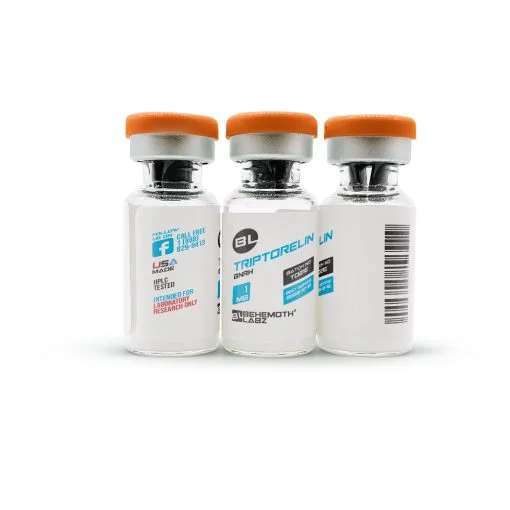
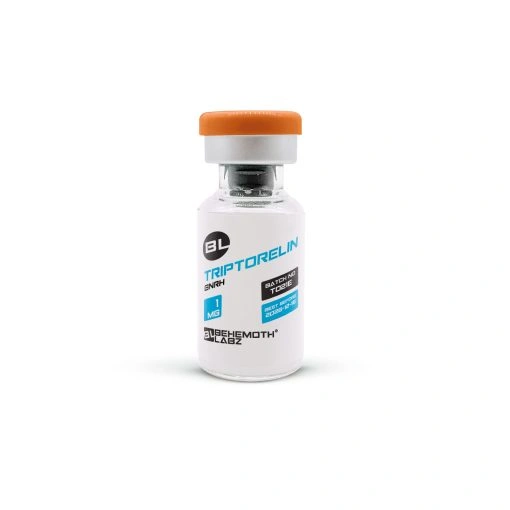
Product Details: Triptorelin (GnRH) Peptide
Triptorelin is a lab man-made decapeptide. It is an analog of gonadotropin-releasing hormone (GnRH). It was developed for use in experimental and preclinical research models. It is structurally made to copy endogenous GnRH while showing boosted stability and receptor affinity. Hence the compound becomes ideal for studying endocrine signaling pathways in controlled laboratory environments.
In research settings, Triptorelin is used to see regulatory mechanisms of the hypothalamic-pituitary-gonadal (HPG) axis. Its interaction with hormone-responsive pathways allows researchers to check:
- feedback systems,
- receptor dynamics, and
- endocrine signaling modulation in experimental models
The pamoate salt form is often studied for its extended-release characteristics. This enables sustained receptor interaction in laboratory conditions.
Mechanism of Action
In preclinical and experimental systems, Triptorelin is a GnRH receptor agonist. It stimulates the release of pituitary gonadotropins. This includes luteinizing hormone (LH) and follicle-stimulating hormone (FSH). This acute activation is used in laboratory studies to find downstream signaling and steroidogenic pathway activation.
Prolonged exposure leads to desensitization and downregulation of GnRH receptors. This suppresses gonadotropin release and inhibition of downstream endocrine signaling pathways. These dual-phase effects make Triptorelin a valuable tool for studying endocrine feedback mechanisms, receptor regulation, and hormonal signaling dynamics in laboratory environments.
Properties of Triptorelin (GnRH) Peptide:
- Molecular Formula: C64H82N18O13
- Molecular Weight: 1311.4 g/mol
- CAS Number: 57773-63-4
- PubChem CID: 5739
- Synonyms: Triptorelin; Triptorelin pamoate; Decapeptyl; Diphereline; Gonapeptyl; Salvacyl; Decapeptyl Depot
- Peptide Class: Synthetic GnRH analog (decapeptide)
- IUPAC Name: L-pyroglutamyl-L-histidyl-L-tryptophyl-L-seryl-L-tyrosyl-D-tryptophyl-L-leucyl-L-arginyl-L-prolyl-glycinamide
Research Applications/Benefits of Triptorelin (GnRH) Peptide
Endocrine Axis Regulation Studies
Triptorelin is widely used in laboratory research to investigate regulatory mechanisms of the hypothalamic-pituitary-gonadal axis and hormone feedback systems in experimental models.
GnRH Receptor Signaling Research
Applied in preclinical systems to study receptor activation, desensitization, and intracellular signaling pathways associated with GnRH receptor dynamics.
Hormonal Feedback Mechanism Analysis
Utilized in controlled environments to examine biphasic hormonal responses, including initial stimulation and subsequent suppression of endocrine signaling pathways.
Steroidogenesis Pathway Investigation
Used in experimental models to explore regulation of gonadotropin-mediated steroidogenic signaling and associated biochemical processes.
Extended-Release Peptide Research
The pamoate form is studied for its sustained-release properties, enabling investigation of prolonged receptor interaction and signaling modulation in laboratory settings.
Why Choose BehemothLabz to Buy Triptorelin (GnRH) Peptide
BehemothLabz is committed to providing high-purity research peptides manufactured under strict quality control standards. Each batch of Triptorelin undergoes independent third-party testing to verify identity, purity, and consistency. With a focus on transparency and scientific reliability, BehemothLabz supports researchers with dependable compounds suitable for advanced laboratory and preclinical investigations.
Disclaimer: This information is for educational purposes. We do not allow the human consumption of our products. All our products are sold for laboratory and research experiments.
ATTENTION: All BehemothLabz products are strictly for LABORATORY AND RESEARCH PURPOSES ONLY. They are not to be used for any human or veterinary purposes.
References:
Conn PM, Crowley WF Jr. “Gonadotropin-releasing hormone and its analogs.” Annual Review of Medicine. 1994. https://doi.org/10.1146/annurev.med.45.1.391