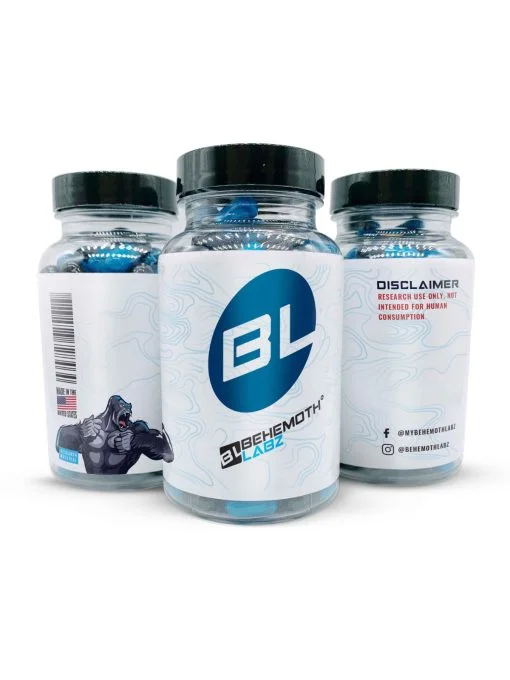

Guanfacine – Product Information
Guanfacine has been investigated for its effects on neuropsychiatric and cardiovascular parameters in experimental and preclinical models. Its associated pathways have been examined in relation to neuroendocrine signaling, hemodynamic activity, and attentional modulation in experimental models.
It is a member of the pharmacological class known as alpha-2 agonists, which modulates neural signaling pathways in experimental models by acting on alpha-2 adrenergic receptors.
- CAS Number is stated as 29110-47-2.
- Molar Mass is 246.72 g/mol.
- It has a Chemical Formula of C9H9Cl2N3O
- IUPAC Nameu: N-(diaminomethylidene)-2-(2,6-dichlorophenyl)acetamide.
- Also known by Synonyms as the brand name Intuniv, as well as by other trade names such as Tenex, Afken, and Estulic.
What is Guanfacine?
On October 27, 1986, the FDA approved guanfacine. This is a white to off-white crystalline powder, sporadically soluble in water, approximately 1 mg/mL. The 2-octanol/water partition coefficient (logP) of guanfacine hydrochloride is 0.10; when dissolved in water, at a pH of 4 and a dissociation constant of 7.69. The only organic solvent with relatively high solubility is methanol.
It belongs to a class of medications known as alpha-2 agonists, which function by modulating adrenergic signaling pathways in central and peripheral nervous system models.
80% of Guanfacine is bioavailable when administered orally in preclinical models. No distinct evidence of first-pass metabolism has been observed. With a 17-hour elimination half-life, renal excretion is the primary mode of elimination in experimental models. The major intermediate is an epoxide, and the main metabolite is the 3-hydroxy-derivative, with evidence of modest biotransformation. Impairment of renal function does not affect elimination in model systems.
How Does Guanfacine Work?
Guanfacine functions by increasing the availability of norepinephrine, a neurotransmitter involved in modulating attention-related neural circuits. Being an agonist of the 2-adrenergic receptor, guanfacine affects the 2-adrenergic receptors’ ability to function. These receptors, which are dispersed throughout the central neural circuitry, modulate the autonomic pathways, which are involved in stress-related processes in experimental systems.
Guanfacine can reduce dopamine release, which is associated with hyperkinetic activity and other neurophysiological markers of attentional dysregulation. This effect is achieved through the activation of these receptors in preclinical models.
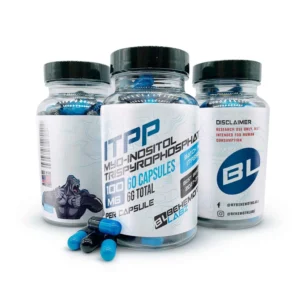
BehemothLabz Disclaimer
Please make sure you go through the Terms and Conditions, and please familiarize yourself with it as it is important. Please research the scientific uses of this product before making any purchases. Make note that the packaging and labels of the product may differ from those shown on the website.
Buying the product means you agree with our Terms and Conditions. You can contact our awesome customer service team at support@behemothlabz.com if you are not fully satisfied with the product. Customer satisfaction is our number one priority!