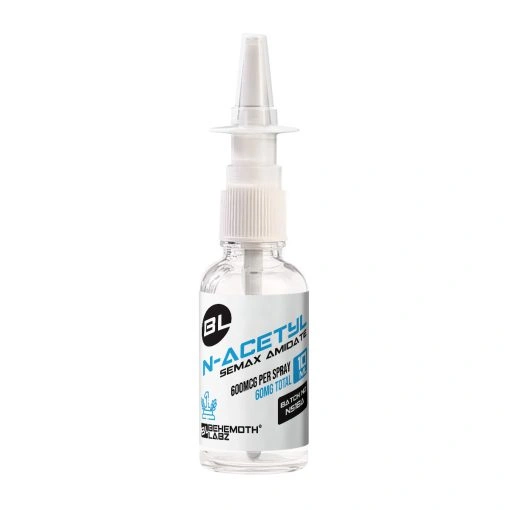
N-Acetyl Semax Amidate is a synthetic peptide analog derived from modified amino acid sequences of the Semax peptide framework. Structural modifications, including N-acetylation and amidation, are incorporated to influence peptide stability, receptor interaction, and resistance to enzymatic degradation.
Peptide-based compounds such as N-Acetyl Semax Amidate are studied in biochemical research for their interaction with receptor systems and involvement in intracellular signaling pathways. Its molecular structure allows it to be examined in relation to neuropeptide analog behavior and ligand-receptor binding dynamics.
Mechanism of Action
N-acetyl semax amidate nasal spray is investigated for its interaction with neuropeptide receptor systems and associated intracellular signaling pathways.
At the molecular level, this compound is studied for its potential influence on neurotransmitter-related signaling cascades, particularly those involving dopaminergic pathway modulation. These pathways are analyzed in terms of receptor binding interactions, signal transduction, and downstream molecular responses.
The structural modifications of the peptide contribute to altered enzymatic stability and receptor binding kinetics, making it relevant in studies focused on peptide-receptor affinity and intracellular communication mechanisms.
Chemical Properties of N-Acetyl Semax Amidate
| Property | Value |
| Chemical Formula | C39H54N10O10S |
| Molar Mass | 854.97 g/mol |
| CAS Number | 80714-61-0 |
| IUPAC Name | 3-Chloro-2,4-difluorobenzoic acid |
| Synonyms | NA semax amidate, n-acetyl semax amidate |
Research Applications
Neuropeptide Receptor Interaction Studies
N-Acetyl Semax Amidate is utilized in laboratory research to examine peptide interaction with neuropeptide receptor systems. Studies focus on ligand binding, receptor activation, and signal transduction processes at the molecular level.
Neurotransmitter Pathway Analysis
This compound is applied in research investigating signaling pathways associated with neurotransmitter systems. These studies examine molecular interactions involved in pathway modulation, receptor engagement, and intracellular signaling cascades.
Peptide Stability and Enzymatic Resistance Research
N-Acetyl Semax Amidate is studied for its resistance to enzymatic degradation due to structural modifications such as acetylation and amidation. Research focuses on peptide stability, degradation kinetics, and molecular persistence in controlled environments.
Structure-Activity Relationship (SAR) Studies
The compound is utilized in structure-activity relationship research to analyze how modifications in peptide structure influence receptor binding affinity, signaling activity, and molecular interactions.
Why Choose Behemoth Labz to Buy N-Acetyl Semax Amidate for Research?
Behemoth Labz provides research-grade N-Acetyl Semax Amidate manufactured under controlled laboratory conditions with strict quality assurance protocols. Each batch undergoes analytical verification to ensure consistency in molecular composition and purity.
Comprehensive documentation, including laboratory testing reports and sourcing transparency, supports reproducibility in experimental settings. BehemothLabz maintains a compliance-focused approach, supplying compounds intended strictly for laboratory-based investigation and analytical research.
Disclaimer
N-Acetyl Semax Amidate is intended strictly for laboratory research and analytical purposes only. It is not intended for use in diagnostic procedures, therapeutic applications, or in vivo studies of any kind.
Any references to biochemical pathways, receptor interactions, or enzymatic processes are provided solely for informational and research-context purposes. This compound must be handled exclusively by qualified professionals in controlled laboratory environments in accordance with applicable regulations and safety guidelines.
Improper handling or use outside of controlled research settings is strictly prohibited.
References
- Sciacca, M. F. M., Naletova, I., Giuffrida, M. L., & Attanasio, F. (2022). Semax, a Synthetic Regulatory Peptide, Affects Copper-Induced Abeta Aggregation and Amyloid Formation in Artificial Membrane Models. ACS chemical neuroscience, 13(4), 486–496. https://doi.org/10.1021/acschemneuro.1c00707
- Tatham, M. H., Cole, C., Scullion, P., Wilkie, R., Westwood, N. J., Stark, L. A., & Hay, R. T. (2017). A Proteomic Approach to Analyze the Aspirin-mediated Lysine Acetylome. Molecular & cellular proteomics : MCP, 16(2), 310–326. https://doi.org/10.1074/mcp.O116.065219