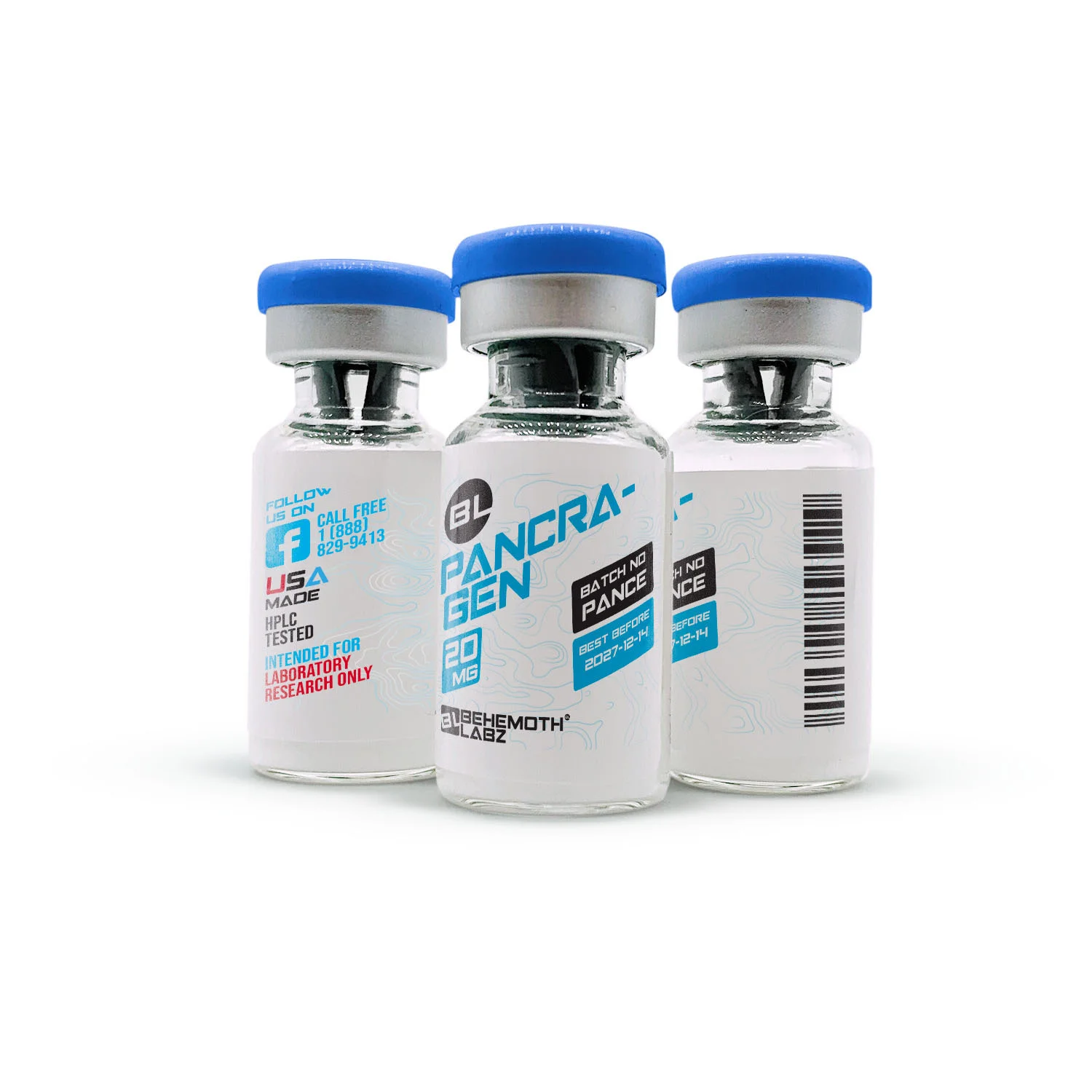
Product Details – Pancragen
Pancragen is a synthetic tetrapeptide composed of four amino acids: lysine, glutamic acid, aspartic acid, and tryptophan (KEDW). It is structurally derived from peptide fragments associated with pancreatic cellular systems and is utilized in controlled research environments.
In laboratory settings, pancragen is examined for its interaction with intracellular components and regulatory pathways. Its defined amino acid sequence supports consistent investigation into peptide-mediated signaling and gene expression mechanisms at the molecular level.
This compound is supplied strictly for laboratory research purposes and is not intended for consumption, medical, or diagnostic use.
Mechanism of Action
At the molecular level, pancragen is studied for its ability to interact with intracellular environments and influence gene expression pathways. Upon cellular entry, it is analyzed for its role in modulating transcriptional activity associated with regulatory proteins.
These interactions are examined in vitro to evaluate how peptide signaling influences gene expression patterns and intracellular communication. Researchers focus on pathways linked to cellular regulation, including those associated with mitochondrial signaling and transcriptional control.
Additionally, pancragen is utilized to investigate peptide-driven modulation of biochemical pathways, contributing to a broader understanding of intracellular signaling and regulatory network behavior under controlled experimental conditions.
Chemical Properties of Pancragen
| Attribute | Details |
| Compound Name | Pancragen |
| Classification | Synthetic tetrapeptide |
| Molecular Formula | C26H36N6O9 |
| Molecular Weight | 576.6 g/mol |
| PubChem CID | 13374465 |
| Synonyms | KEDW; Lys-Glu-Asp-Trp; H-Lys-Glu-Asp-Trp-OH |
| Primary Target | Gene expression and intracellular signaling pathways |
| Research Context | Peptide signaling and transcriptional regulation studies |
| Format | Research peptide (non-consumable) |
| Stability | Maintained under controlled laboratory storage conditions |
Research Applications
Gene Expression Analysis
Pancragen is utilized in experimental systems to examine peptide influence on transcriptional activity. Researchers analyze how peptide interactions affect gene expression patterns at the molecular level.
Intracellular Signaling Studies
This compound is applied in studies investigating intracellular communication pathways, including those associated with mitochondrial signaling and regulatory protein activity.
Peptide-Cell Interaction Research
Pancragen supports investigations into how short peptides interact with cellular environments. These studies focus on understanding peptide-mediated signaling and regulatory mechanisms.
Why Choose BehemothLabz to Buy Pancragen for Research
BehemothLabz supplies research-grade Pancragen produced under controlled laboratory conditions with strict quality assurance protocols in place. Each batch undergoes detailed analytical verification to ensure consistency in molecular composition and purity.
In addition, comprehensive documentation, including laboratory testing reports and sourcing transparency, supports reproducibility across experimental applications. BehemothLabz maintains a compliance-focused approach, ensuring that all compounds are supplied exclusively for laboratory-based investigation and analytical research.
Disclaimer
Pancragen is intended strictly for laboratory research and analytical purposes only. It is not designed for diagnostic procedures, therapeutic applications, or any form of in vivo study.
All references to biochemical pathways, receptor interactions, and enzymatic processes are provided solely within a research context. This compound must be handled only by qualified professionals within controlled laboratory environments, in accordance with applicable regulations and safety standards.
Any use outside of these defined research conditions is strictly prohibited.
References
- Korkushko, O. V., Khavinson, V. K.h, Shatilo, V. B., Antonyk-Sheglova, I. A., & Bondarenko, E. V. (2011). Prospects of using pancragen for correction of metabolic disorders in elderly people. Bulletin of experimental biology and medicine, 151(4), 454–456. https://doi.org/10.1007/s10517-011-1354-4
- Khavinson, V. K.h, Gavrisheva, N. A., Malinin, V. V., Chefu, S. G., & Trofimov, E. L. (2007). Effect of pancragen on blood glucose level, capillary permeability and adhesion in rats with experimental diabetes mellitus. Bulletin of experimental biology and medicine, 144(4), 559–562. https://doi.org/10.1007/s10517-007-0377-3