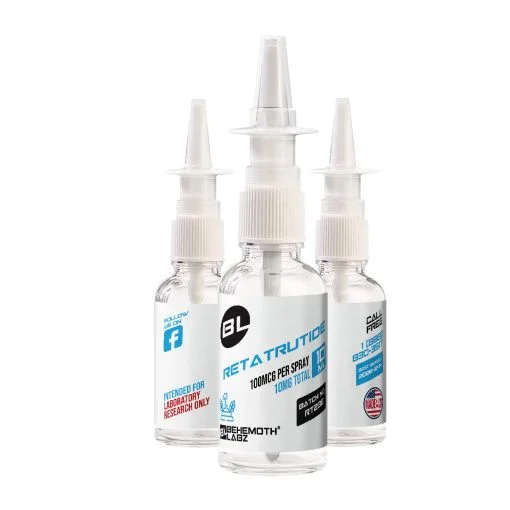
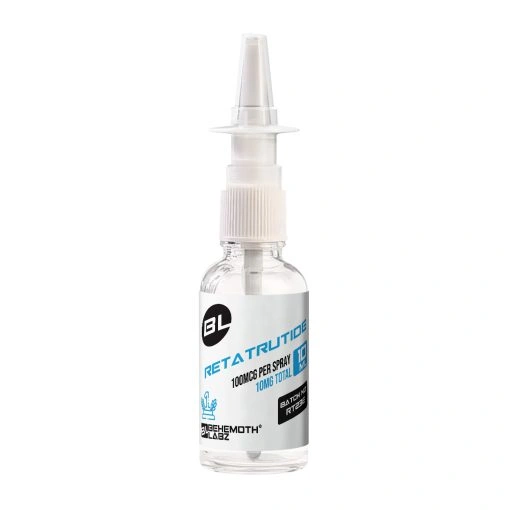
Retatrutide is a synthetic peptide-based compound classified as a multi-receptor agonist. It is structurally designed to interact with multiple G protein-coupled receptors, including glucagon-like peptide-1 (GLP-1), glucose-dependent insulinotropic polypeptide (GIP), and glucagon receptors.
This compound is studied in biochemical research for its receptor-binding properties and its role in modulating signaling pathways associated with peptide hormone receptor systems. Its multi-receptor interaction profile makes it relevant for investigations involving ligand-receptor specificity and coordinated signaling mechanisms.
Mechanism of Action
Retatrutide Nasal Spray is investigated for its interaction with three receptor classes:
- GLP-1 receptor (GLP-1R)
- GIP receptor (GIPR)
- Glucagon receptor (GCGR).
At the molecular level, Retatrutide binds to these G protein-coupled receptors, initiating receptor activation and downstream intracellular signaling cascades.
These signaling pathways are studied in terms of second messenger systems, including cyclic adenosine monophosphate (cAMP) generation and receptor-mediated signal transduction.
The compound’s multi-receptor activity allows for analysis of coordinated receptor signaling, ligand bias, and pathway integration within controlled biochemical environments.
Chemical Properties of Retatrutide
| Property | Value |
| Molecular Formula | C223H343F3N46O70 |
| Molecular Weight | 4845.444 g/mol |
| CAS Number | 2381089-83-2 |
| Synonyms | Retatrutide, reta nasal spray, retatrutide nasal |
| IUPAC Name | L-tyrosyl-2-methylalanyl-L-glutaminylglycyl-L-threonyl-L-phenylalanyl-L-threonyl-L-seryl-L-alpha-aspartyl-L-tyrosyl-L-seryl-L-isoleucyl-2-methyl-L-leucyl-L-leucyl-L-alpha-aspartyl-L-lysyl-N6-(N-(19-carboxy-1-oxononadecyl)-L-gamma-glutamyl-2-(2-(2-aminoethoxy)ethoxy)acetyl)-L-lysyl-L-alanyl-L-glutaminyl-2-methylalanyl-L-alanyl-L-phenylalanyl-L-isoleucyl-L-alpha-glutamyl-L-tyrosyl-L-leucyl-L-leucyl-L-alpha-glutamylglycylglycyl-L-prolyl-L-seryl-L-serylglycyl-L-alanyl-L-prolyl-L-prolyl-L-prolyl-L-serinamide |
Research Applications
Multi-Receptor Binding Studies
Retatrutide nasal is utilized in laboratory research to examine ligand interaction across multiple receptor types, including GLP-1R, GIPR, and GCGR. Studies focus on receptor affinity, binding kinetics, and activation profiles.
GPCR Signaling Pathway Analysis
This compound is applied in studies investigating G protein-coupled receptor (GPCR) signaling mechanisms. Research examines second messenger systems, including cAMP-mediated signaling and downstream pathway activation.
Ligand Bias and Pathway Integration
Retatrutide is studied for its ability to engage multiple receptor pathways simultaneously. This enables analysis of ligand bias, receptor selectivity, and cross-pathway signaling interactions.
Peptide Structure-Function Analysis
The compound is used in structure-activity relationship (SAR) studies to evaluate how peptide sequence and structural modifications influence receptor binding and signaling dynamics.
Why Choose Behemoth Labz to Buy Retatrutide for Research?
Behemoth Labz provides research-grade Retatrutide Nasal Spray that is manufactured under controlled laboratory conditions with strict quality assurance protocols. Each batch undergoes analytical verification to ensure consistency in molecular composition and purity.
Comprehensive documentation, including laboratory testing reports and sourcing transparency, supports reproducibility in experimental settings. BehemothLabz maintains a compliance-focused approach, supplying compounds intended strictly for laboratory-based investigation and analytical research.
Disclaimer
Reta nasal spray is intended strictly for laboratory research and analytical purposes only. It is not intended for use in diagnostic procedures, therapeutic applications, or in vivo studies of any kind.
Any references to biochemical pathways, receptor interactions, or enzymatic processes are provided solely for informational and research-context purposes. This compound must be handled exclusively by qualified professionals in controlled laboratory environments in accordance with applicable regulations and safety guidelines.
Improper handling or use outside of controlled research settings is strictly prohibited.
References
- Neumann, J., Ahlrep, U., Hofmann, B., & Gergs, U. (2025). Contractile effects of retatrutide in isolated mouse atrial preparations. Naunyn-Schmiedeberg’s archives of pharmacology, 398(12), 17147–17160. https://doi.org/10.1007/s00210-025-04335-0
- Kanu, C., Boye, K. S., Poon, J. L., Goetz, I., Williamson, S., Lou, J., Hartman, M. L., Martin, C. K., & Coskun, T. (2025). Appetite, eating attitudes, and eating behaviours during treatment with retatrutide in adults with type 2 diabetes: Results of a phase 2 study. Diabetes, obesity & metabolism, 27(12), 6988–6998. https://doi.org/10.1111/dom.70097