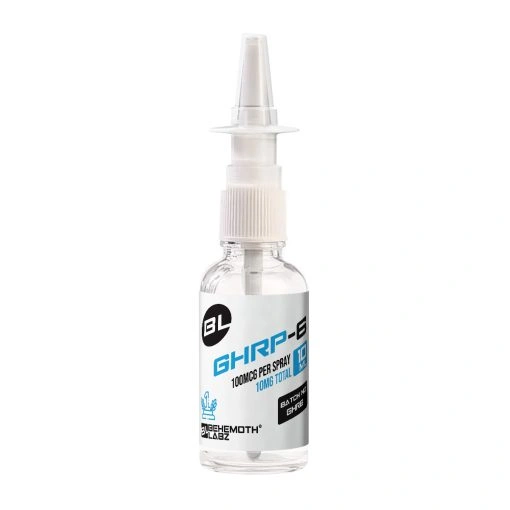
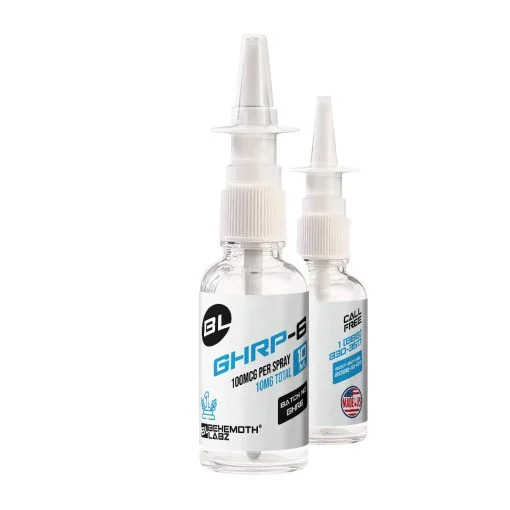
Product Details: GHRP-6 Nasal Spray
GHRP-6 (Growth Hormone Releasing Peptide-6) is a synthetic hexapeptide. It belongs to the class of growth hormone secretagogues (GHS). It is structurally related to met-enkephalin. It is investigated in laboratory environments for its interaction with growth hormone regulatory systems.
In experimental settings, GHRP-6 is studied for its ability to interact with the growth hormone secretagogue receptor (GHS-R1a). This is a receptor linked with endocrine signaling pathways. Researchers utilize this compound in the ghrp-6 nasal spray to examine peptide-receptor interactions. They also use it for studying signaling mechanisms related to hormone regulation.
Researchers investigate GHRP-6 in controlled models to explore:
- growth hormone signaling pathways in experimental systems
- ghrelin receptor (GHS-R1a) activation mechanisms
- neuroendocrine signaling interactions in laboratory environments
- peptide structure-function relationships in biochemical assays
Mechanism of Action
The compound in the GHRP-6 nasal spray functions by interacting with the growth hormone secretagogue receptor (GHS-R1a). This is expressed in regions linked with neuroendocrine regulation in experimental models. This interaction is studied for its ability to initiate signaling cascades associated with endogenous growth hormone release.
The compound mimics the activity of ghrelin. It is obvious in laboratory systems though. It allows researchers to examine receptor binding dynamics, intracellular signaling pathways, and downstream molecular responses using controlled experimental approaches.
Properties of GHRP-6:
- Molecular Formula: C46H56N12O6
- Molecular Weight: 873.0 g/mol
- CAS Number: 87616-84-0
- IUPAC Name: DL-histidyl-DL-tryptophyl-DL-alanyl-DL-tryptophyl-DL-phenylalanyl-DL-lysinamide
- Synonyms: GHRP-6
Research Applications/Benefits of GHRP-6 Nasal Spray
Growth Hormone Signaling Studies:
Researchers are investigating GHRP-6 for its role in growth hormone regulatory pathways in preclinical models. Experimental findings suggest that receptor activation may affect signaling cascades associated with endocrine system research.
Ghrelin Receptor Interaction Analysis:
GHRP-6 is studied for its interaction with the GHS-R1a receptor in laboratory systems. These investigations focus on receptor binding affinity, activation mechanisms, and downstream signaling effects in controlled environments.
Neuroendocrine Pathway Research:
This compound is utilized in research models to examine neuroendocrine communication and signaling processes. Studies explore how peptide-receptor interactions contribute to broader hormonal regulation networks.
Peptide Signaling and Molecular Dynamics:
GHRP-6 is also investigated in biochemical assays to evaluate peptide structure-function relationships, receptor activation kinetics, and intracellular signaling responses.
Why Choose BehemothLabz to Buy GHRP-6 for Sale?
Buy ghrp-6 nasal spray from Behemoth Labz as you will always get quality-focused research compounds. Our GHRP-6 Nasal Spray is manufactured under strict quality control protocols and undergoes third-party testing to verify purity, potency, and composition.Each batch is developed to support consistency in laboratory research, with clearly labeled specifications for experimental use. Our secure packaging and reliable shipping options ensure that products are delivered efficiently for research applications.
BehemothLabz is committed to providing high-quality materials that support advanced scientific investigation and peptide research.
Disclaimer: This information is for educational purposes. We do not allow the human consumption of our products. All our products are sold for laboratory and research experiments.
ATTENTION: All BehemothLabz products are strictly for LABORATORY AND RESEARCH PURPOSES ONLY. They are not to be used for any human or veterinary purposes.
References:
- Pombo M, Leal-Cerro A, Barreiro J, Peñalva A, Peino R, Mallo F, Dieguez C, Casanueva FF.
- J Pediatr Endocrinol Metab. 1996 Jun;9 Suppl 3:333-8. https://pubmed.ncbi.nlm.nih.gov/8887178/
- Zhao X, Pan K, Li R, Liu M, Li D, Jia P, Han Z, Han ZC, Guo Z, Li Z, Li Q.
- J Nanobiotechnology. 2025 Dec 1;24(1):15. doi: 10.1186/s12951-025-03888-9.
- PMID: 41327290 https://pubmed.ncbi.nlm.nih.gov/41327290/