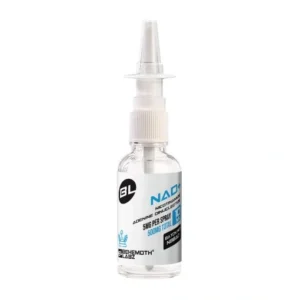

Product Details
HGH Fragment 176-191 is a synthetic peptide derived from a specific amino acid sequence of the larger growth hormone structure. It consists of residues 176 through 191, representing a discrete functional segment studied independently from the full-length peptide. This fragment is utilized in controlled research settings to examine sequence-specific interactions at the molecular level without incorporating the complete structural framework of the parent hormone
Mechanism of Action
HGH Fragment 176-191 is studied for its interaction with receptor systems associated with lipid metabolism signaling pathways. Research suggests that it may engage with beta-3 adrenergic receptor-related mechanisms, initiating intracellular signaling cascades linked to cyclic adenosine monophosphate (cAMP) activity.
These signaling events are associated with the activation of enzymes such as hormone-sensitive lipase (HSL), which plays a role in lipid metabolism at the biochemical level. The peptide is also examined for its influence on pathways regulating the hydrolysis of triglycerides into constituent molecules within cellular systems.
All observed interactions are evaluated in terms of receptor binding, enzyme activation, and intracellular signaling rather than outcome-based effects.
Chemical Properties of HGH Fragment 176-191
| Property | Value |
| Product Name | HGH Fragment 176-191 |
| Chemical Classification | Synthetic peptide fragment |
| Molecular Formula | C₇₈H₁₂₃N₂₃O₂₂S₂ |
| Molecular Weight | 1799.1 g/mol |
| CAS Number | 66004-57-7 |
| PubChem CID | 16131230 |
| Structure Type | Peptide fragment (residues 176–191) |
| Stability | Maintains structural integrity under controlled laboratory storage conditions |
Research Applications
-
Beta-3 Adrenergic Receptor Pathway Studies
HGH Fragment 176-191 is utilized in research focused on receptor-mediated signaling pathways associated with beta-3 adrenergic activity. Studies examine ligand-receptor interactions and downstream signaling responses.
-
cAMP-Dependent Signaling Analysis
The peptide is investigated for its potential role in modulating intracellular cAMP levels following receptor interaction. Research explores how this signaling pathway influences enzyme activation and phosphorylation processes.
-
Lipase Enzyme Activity Research
This compound is examined for its interaction with enzymes such as hormone-sensitive lipase. Investigations focus on how peptide signaling may influence enzymatic activity within lipid-related biochemical pathways.
-
Lipid Metabolism Pathway Exploration
Research involving HGH Fragment 176-191 includes analysis of biochemical pathways associated with lipid hydrolysis. These studies are centered on molecular signaling and enzymatic regulation within controlled environments.
Why Choose BehemothLabz to Buy HGH Fragment 176-191 for Research
BehemothLabz provides research-grade HGH Fragment 176-191 manufactured under controlled laboratory conditions with strict quality assurance protocols. Each batch undergoes analytical verification to ensure consistency in molecular composition and purity.
Comprehensive documentation, including laboratory testing reports and sourcing transparency, supports reproducibility in experimental settings. BehemothLabz maintains a compliance-focused approach, supplying compounds intended strictly for laboratory-based investigation and analytical research
Disclaimer
HGH Fragment 176-191 is intended strictly for laboratory research and analytical purposes only. It is not intended for use in diagnostic procedures, therapeutic applications, or in vivo studies of any kind.
Any references to biochemical pathways, receptor interactions, or enzymatic processes are provided solely for informational and research-context purposes. This compound must be handled exclusively by qualified professionals in controlled laboratory environments in accordance with applicable regulations and safety guidelines.
Improper handling or use outside of controlled research settings is strictly prohibited.
References
- Ng, F. M., & Bornstein, J. (1978). Hyperglycemic action of synthetic C-terminal fragments of human growth hormone. The American journal of physiology, 234(5), E521–E526. https://doi.org/10.1152/ajpendo.1978.234.5.E521
- Krombholz, S., Thomas, A., & Thevis, M. (2022). Investigations into the In Vitro Metabolism of hGH and IGF-I Employing Stable-Isotope-Labelled Drugs and Monitoring Diagnostic Immonium Ions by High-Resolution/High-Accuracy Mass Spectrometry. Metabolites, 12(2), 146. https://doi.org/10.3390/metabo12020146